In 2025, the "desktop version" of your website has officially become the secondary version. With the rise of foldable devices, AI-integrated mobile browsers, and a global population that spends over 7 hours a day on smartphones, your digital presence is defined by how it feels in the palm of a hand. The days of merely "mobile-friendly" websites are gone; today, a genuinely effective online strategy begins and ends with the mobile user.
At J&M Digital Solutions, we’ve seen firsthand that even the most aesthetically pleasing desktop site can fail if it isn’t built with a mobile-first heartbeat. This isn't just a design philosophy; it's a critical business imperative.
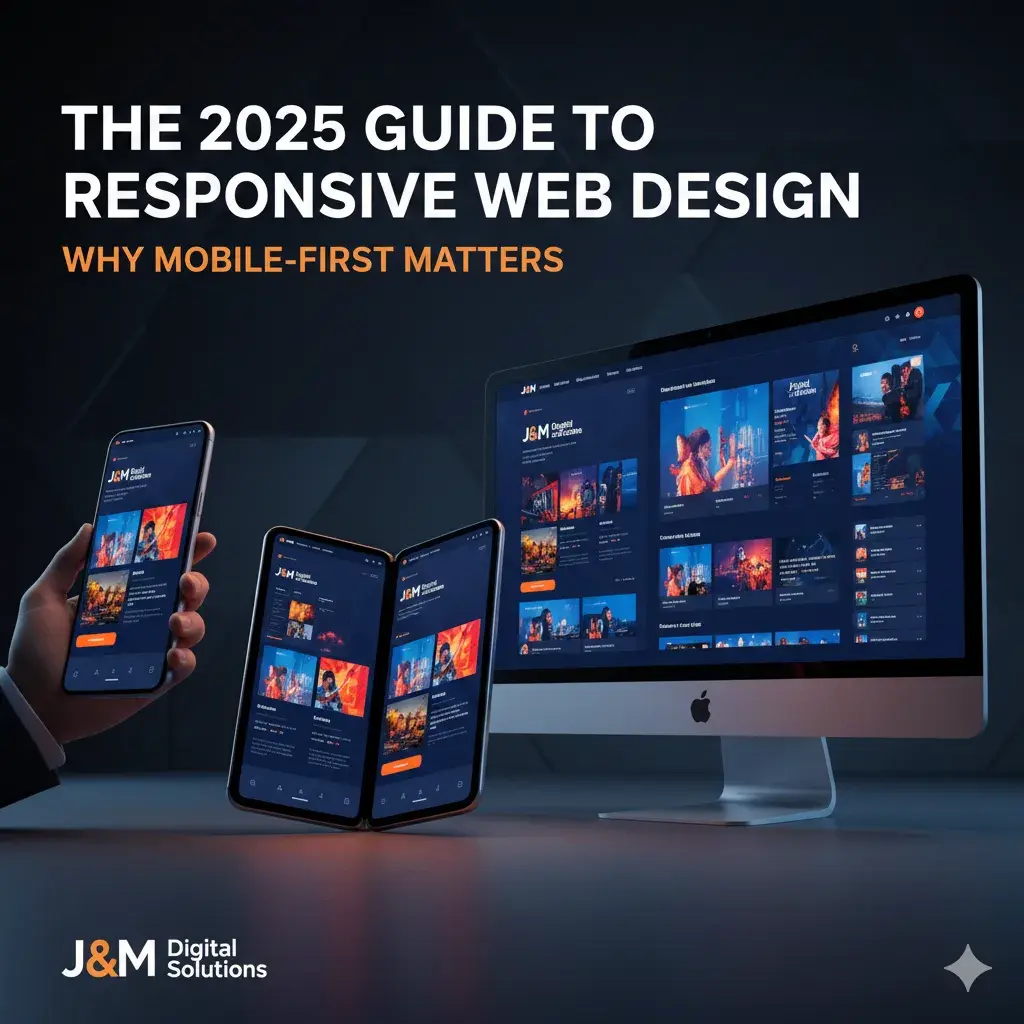
1. The Unstoppable Rise of Mobile: 2025 Statistics
The statistics are undeniable. Reports indicate that over 70% of all global web traffic now originates from mobile devices. This includes everything from executives checking emails on a commute to shoppers making impulse purchases on TikTok or Instagram.
Users expect immediacy. If your website can’t deliver a clean experience within moments, they will swiftly move to a competitor. This isn't just about convenience; it's about conversion, brand perception, and your bottom line.
2. What Exactly is "Mobile-First"?
To grasp mobile-first in 2025, we must dispel a myth: it is not about shrinking a desktop site. That "desktop-down" approach leads to tiny text and cramped layouts.
Mobile-first design means starting the design process for the smallest screen and "progressively enhancing" it for larger ones. In 2025, this is about intent. Mobile users are looking for quick answers, fast checkouts, or immediate contact. Your design must prioritize these actions.
3. The 4 Pillars of Modern Responsive Design
To succeed this year, your website must master these four technical and aesthetic pillars.
Pillar 1: Performance & Speed (The "Zero-Latency" Goal)
In 2025, users have zero patience. Studies show that even a 1-second delay can lead to a 7% reduction in conversions.
How J&M Digital Solutions achieves this:
Next-Gen Formats: We use AVIF and WebP image formats for superior compression.
Lazy Loading: Content only loads as the user scrolls, saving data and initial load time.
Pillar 2: Dynamic & Fluid Layouts
The landscape of devices in 2025 is incredibly diverse, from smartwatches to tablets and foldable phones. We use CSS Grid and Flexbox to ensure your layout "flows" into any container. Instead of fixed pixels, we use relative units (percentages and viewport units) so text scales proportionally.
Pillar 3: Touch-Friendly Navigation & "The Thumb Zone"
Most users navigate with their thumbs while holding their phone with one hand. This is the "Thumb Zone"—the area of a screen easily reachable by a user's thumb.
We ensure all interactive elements have a minimum target size of 48x48 pixels to prevent "fat finger" errors and frustrating accidental clicks.
Pillar 4: Accessible & Inclusive Design
Responsive design also means responding to the user’s needs. This includes high-contrast modes for outdoor viewing and ensuring the site is fully navigable via voice commands or screen readers.
[Image showing a side-by-side comparison of a standard mobile site vs. one with accessibility features like high contrast and screen reader labels]
4. Why Mobile-First Matters for Your Bottom Line
Google’s Mobile-First Indexing
Google primarily uses the mobile version of your content for indexing and ranking. If your mobile site is missing content or has technical errors, your desktop rankings will suffer as well.
User Trust and Credibility
A site that requires "pinching and zooming" feels outdated. To a 2025 consumer, an outdated site suggests an outdated business. A smooth mobile experience conveys competence and a customer-centric approach.
Higher Conversion Rates
Mobile users are often "on-the-go" buyers. By streamlining the path to purchase—reducing form fields and integrating mobile payments like Apple Pay—J&M Digital Solutions helps you turn browsers into customers.
5. Common Mobile Design Mistakes to Avoid
Intrusive Pop-ups: Nothing kills a session faster than a full-screen pop-up that is impossible to close on a phone.
Heavy Video Backgrounds: These eat up user data and slow the site to a crawl.
Small Font Sizes: If customers have to squint, they leave. We recommend a minimum of 16px for body text.
6. The Future is Fluid
Responsive web design is not a "set it and forget it" task. As we move further into 2025, the gap between businesses that embrace mobile-first and those that don't will only widen. Your website is your most critical sales tool and the face of your brand.
Is your website ready for the mobile-first era? Let the experts at J&M Digital Solutions audit your current site. We’ll identify bottlenecks and transform your web presence into a high-converting, responsive powerhouse.