If you ask most small business owners in Kenya where their customers come from, many will say Facebook, Instagram, or WhatsApp. Social media feels immediate, accessible, and affordable , especially for businesses in Nairobi, Kiambu, and Embu.
But here’s the uncomfortable truth:
Social media alone does not grow a business long-term.Likes, followers, and views feel good, but they don’t equal stability. Businesses that rely only on social media often struggle with inconsistent leads, sudden drops in reach, and platforms changing the rules overnight.
So what really works for sustainable growth?
Is it a website, social media, or a combination of both?
This article breaks down website vs social media honestly, without hype, and explains what actually builds long-term business growth especially in the Kenyan market.
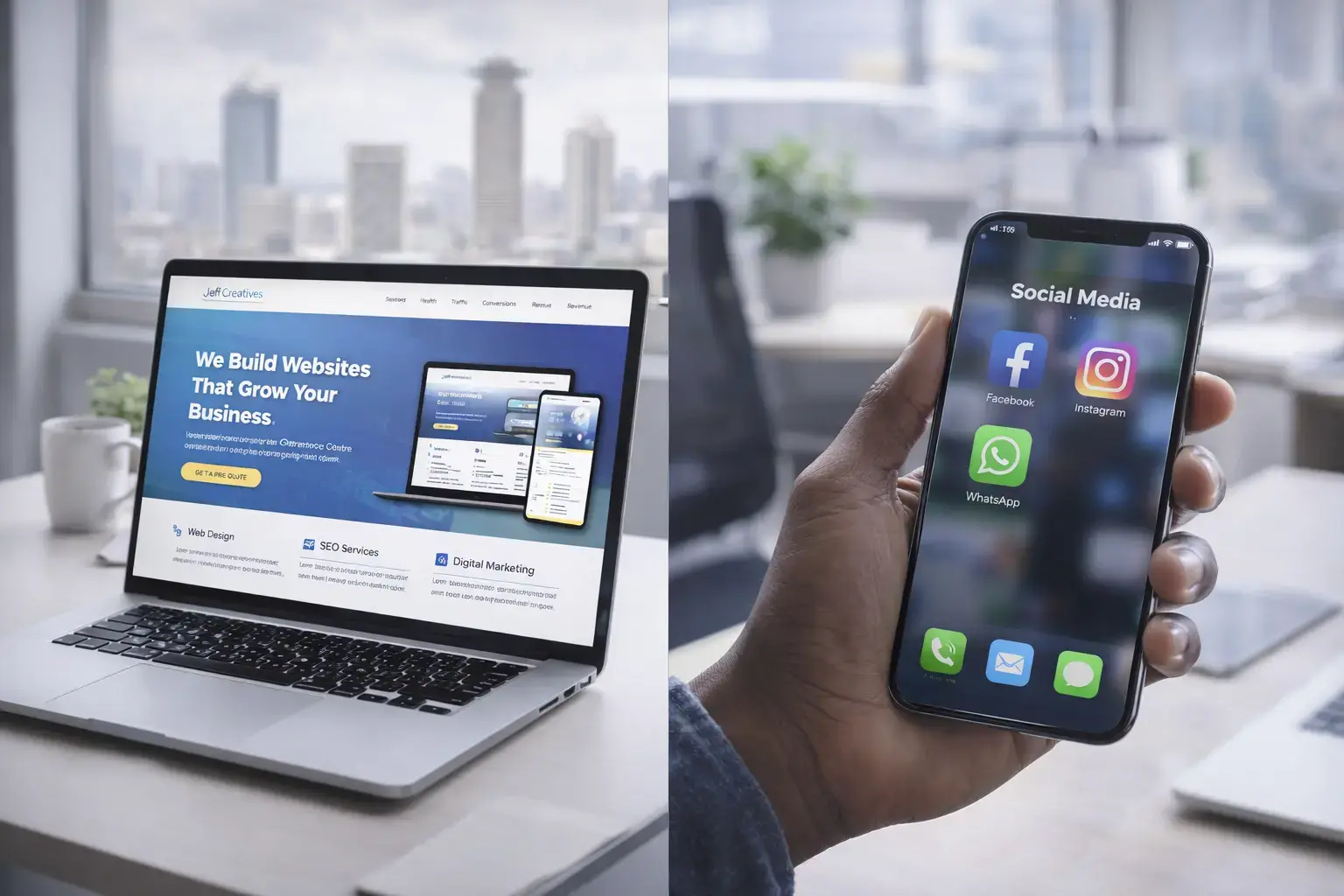
Why Businesses Love Social Media
Social media is attractive for one simple reason: it’s easy to start.
For many small businesses in Nairobi, Kiambu, and Embu, social media offers:
Free account setup
Fast visibility
Direct communication through comments and WhatsApp
A sense of activity and engagement
Platforms like Facebook, Instagram, TikTok, and X (Twitter) make it possible to post today and get attention almost instantly.
This is why many businesses skip building a website entirely and go all-in on social media.
And to be fair , social media does have value.
But that value is often misunderstood.
The Hidden Limitations of Social Media
While social media helps with visibility, it has serious limitations that affect long-term growth.
1. You Don’t Own the Platform
Your followers are not really yours. The platform controls:
Who sees your posts
How many people you reach
Whether your account stays active
One algorithm change can cut your reach overnight.
2. Content Has a Very Short Lifespan
A post on Instagram or Facebook might last a few hours or days. After that, it disappears into the feed.
Compare that to a blog or service page that can bring traffic for years.
3. Serious Buyers Rarely Search Social Media First
When someone needs a service urgently, they usually Google:
“website designer near me”
“SEO services in Nairobi”
“digital marketing Kiambu”
They don’t scroll endlessly hoping to find a random post.
4. No Search Engine Visibility
Social media posts don’t rank well on Google. This means you miss out on high-intent search traffic.
This is one reason many businesses feel stuck despite posting consistently.
What a Website Really Does for a Business
A website is not just an online brochure. It is the foundation of digital growth.
A properly built website:
Works 24/7
Explains your services clearly
Builds trust instantly
Ranks on Google
Converts visitors into leads
For businesses in Nairobi, Kiambu, and Embu, a website acts as a digital headquarters , something social media can never replace.
If you want to understand how structure, usability, and design affect performance, this is covered in detail in our guide on professional website design for small businesses in Kenya.
Website vs Social Media: A Direct Comparison
Let’s simplify the debate.
| Feature | Website | Social Media |
| Ownership | You own it | Platform-owned |
| Lifespan | Long-term | Short-lived |
| Google visibility | Yes | Very limited |
| Trust level | High | Medium |
| Control | Full | Restricted |
| Lead tracking | Easy | Limited |
Social media creates attention.
A website creates conversions.
Which One Actually Grows a Business Long-Term?
Long-term growth depends on consistency, visibility, and trust.
Websites win in all three areas.
Websites Compound Over Time
A well-optimized website grows stronger with age. Blog posts written today can still bring traffic years later through Google searches.
This is why SEO services in Kenya are such a powerful growth tool , they turn your website into a lead-generating asset instead of a static page.
Social Media Is Temporary
Social media visibility must be constantly paid for with time, content, or ads. The moment you stop posting, results disappear.
Websites continue working even when you’re offline.
How Websites and Social Media Should Work Together
The real answer is not website OR social media.
It’s website + social media, with clear roles.
The Correct System Looks Like This:
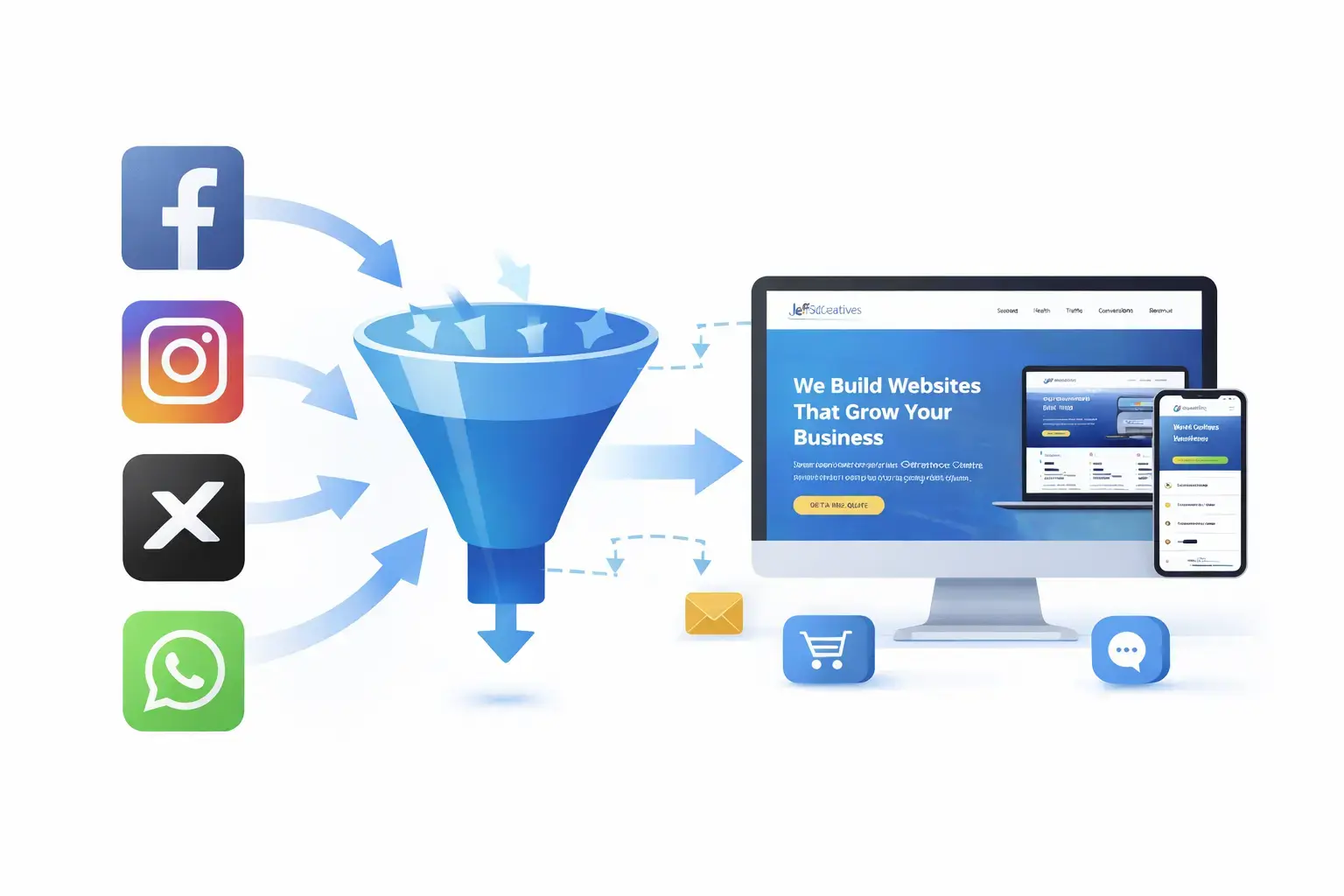
Social media → attracts attention
Website → explains, builds trust, and converts
SEO → brings long-term traffic
Social media should drive people to your website, not replace it.
This exact system is what separates businesses that struggle from those that scale.
The Role of SEO in Long-Term Growth
SEO (Search Engine Optimization) is what allows your website to appear when customers search for services near them.
For example:
A business in Nairobi can rank for “services near me”
A company in Kiambu can attract local search traffic
A startup in Embu can compete with bigger brands
If you want a deep breakdown of how this works, see our detailed guide on SEO services in Kenya and how small businesses rank on Google.
SEO is not about tricks. It’s about:
Relevance
Quality content
Good website structure
Local optimization
Real Kenyan Business Scenarios
Scenario 1: Social Media Only (Nairobi)
A service business posts daily on Instagram. Engagement is decent, but inquiries are inconsistent. When reach drops, leads disappear.
Scenario 2: Website + SEO (Kiambu)
Another business has a simple website optimized for local searches. Blog content answers customer questions. Leads arrive even without daily posting.
Scenario 3: Social + Website + SEO (Embu)
A growing business uses social media to drive traffic to a website. The website ranks locally, collects inquiries, and builds trust. Growth is steady.
The difference is not effort , it’s strategy.
Common Mistakes Businesses Make
Relying Only on Social Media
This creates dependency and instability.
Building a Website With No SEO
A website without SEO is invisible. Design alone is not enough.
No Clear Call to Action
Visitors should always know what to do next: call, WhatsApp, request a quote.
Ignoring Local Search
If your business serves Nairobi, Kiambu, or Embu, your website should clearly reflect that.
What Should a Small Business Start With?
For most small businesses in Kenya, the smartest order is:
A simple professional website
SEO foundation (especially local SEO)
Social media to amplify visibility
This approach avoids wasted effort and builds momentum over time.
If content is part of your strategy, you’ll also benefit from understanding why blogging still works for SEO and how it supports rankings and authority.
Checklist: A Smart Digital Growth Setup
✔ Professional website
✔ Clear service pages
✔ SEO foundation
✔ Location-based keywords
✔ WhatsApp integration
✔ Social media presence
✔ Content strategy
This setup works whether you are in Nairobi, Kiambu, or Embu.
Final Verdict: Website vs Social Media
Social media helps people discover you.
A website helps people choose you.
Businesses that grow long-term:
Own their digital assets
Invest in SEO
Use social media strategically, not emotionally
If you want predictable leads and credibility, a website is not optional.
Call to Action
If you’re relying only on social media and want a more stable, scalable digital system, it’s time to rethink your strategy.
👉 Get a free website & SEO audit
👉 Chat with us on WhatsApp and let’s build a system that actually grows your business

Your customers are already searching on Google.
Make sure they find your website, not just your posts.